
How B2B and B2C Digital Marketing Differ and Drive Business Success
In this rapidly evolving digital world, modern businesses need to embrace advanced marketing strategies that can extend their reach to targeted audiences. For both business-to-customer (B2C) and business-to-business (B2B) entities, digital marketing plays an important role in building brand value and driving revenue. In addition, with the help of digital solution providers, like Saletify, it becomes easier for business owners to embrace appropriate marketing strategies for their business growth. However, the tactics and approach for B2B and B2C businesses operate in varied ways significantly.
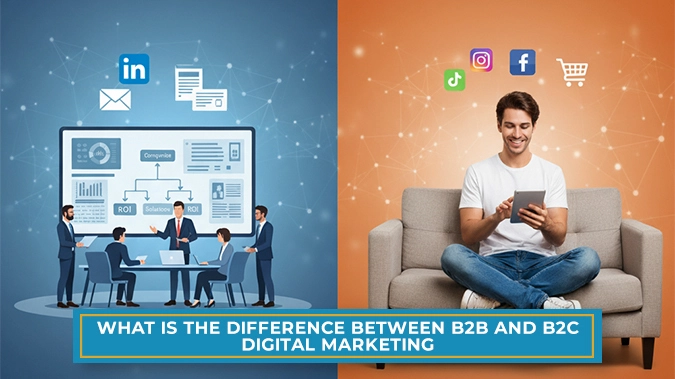
Basically, B2B companies majorly emphasize selling their products and services, such as software, manufacturing tools, and specialized services to other businesses. In contrast, B2C organizations focus on customer growth and that is why they make direct trade statements for their regular wants and needs. The scaling of both types of businesses does not depend on what they sell but how they communicate with their targeted audiences. In this blog, let’s explore the key differences between B2B and B2C business and the latest strategies adopted by them to excel in this rapidly expanding tech-driven world.
What is B2B marketing?
B2B marketing refers to the advertising of products and services to other companies not to consumers. It mainly focuses on the particular needs and problems faced by businesses and helps them build long-lasting trust and relationships.
This type of marketing includes some key processes like identifying potential business buyers, understanding the competitive landscape, market demands, and maintaining customer relationships. This analysis enables B2B businesses with informed decision-making, higher deal values, and extended sales cycles.
In this marketing approach, content marketing, email marketing, and SEO are some popular B2B tactics that help show expertise and gain customer trust. Many leading B2B marketers have started embracing modern technologies such as data analytics and AI-powered algorithms to offer personalized experience to customers globally.
What is B2C Marketing?
This type of marketing mainly aims to advertise products and services directly to specific customers. B2C marketers mostly emphasize connecting to customers emotionally by fulfilling their immediate needs and personal desires.
The key strategy behind B2C marketing is to drive speedy sales through attractive deals, eye-catching briefs about products and services, and calls to action. B2C businesses mostly use emails, social-media platforms, influencer relations, email, social media, and digital ads to reach out to a wide customer base.
In this marketing approach, personalization is another key factor for grabbing the attention of more customers. B2C marketers use customer data and behavior to build offers and communications that cater specifically to their tastes, thereby boosting the effectiveness and even fun of the buying process.
What are the major B2B business categories?
1. B2B Service-Based Businesses
These are companies that provide essential services to support other businesses. Common examples include:
- Business strategy and consulting
- Human resources and recruitment services
- Financial and accounting solutions
- Legal advisory and compliance support
- Marketing, IT, and digital solutions
2. B2B Product-Based Businesses
This category focuses on companies that manufacture or distribute physical goods for business use, such as:
- Wholesale distributors and suppliers
- Industrial equipment and agricultural tool providers
3. B2B SaaS (Software-as-a-Service)
These businesses deliver cloud-based software designed to streamline operations. Popular examples include:
- Customer Relationship Management (CRM) systems
- Invoicing and payment software
- Inventory and supply chain management platforms
4. B2B Marketplaces
Marketplaces act as platforms that connect businesses for trade and collaboration, including:
- Large-scale platforms like Alibaba and IndiaMART
- Niche marketplaces for specific sectors, such as wholesale produce or industrial tools
Effective B2B Digital Marketing Categories
Here are few strategies that leading B2B companies implement to boost their customer reach and revenue:
1. Account-Based Marketing
Account-Based Marketing (ABM) is a strategic approach targeting high-value accounts rather than a broad audience. It personalizes marketing for specific companies and individuals to boost engagement and conversions. ABM maximizes impact and ROI, effectively reversing the traditional sales funnel approach by prioritizing key accounts from the start.
2. LinkedIn Marketing
LinkedIn Marketing is a B2B strategy leveraging the platform to boost brand awareness, generate leads, and engage potential clients. Businesses can connect with over 50 million decision-makers by using targeted content, ads, and direct outreach. With 80% of B2B social media leads originating from LinkedIn, it remains essential for effective B2B marketing.
3. Email Marketing
Email Marketing is the practice of sending promotional or informational emails to a targeted audience to promote products, services, or a brand. It involves creating a relevant contact list and sharing valuable content and offers. As a core B2B strategy, email marketing supports activities from lead nurturing to direct sales promotion. In addition, with the help of entities like Saletify, companies can incorporate email marketing strategies to expand their reach.
Explore customized marketing solutions at Saletify for your business growth!
4. Influencer Marketing
Influencer Marketing in B2B involves partnering with industry experts to promote your brand, products, or services to their established audience. Businesses can amplify their message, build trust, and effectively reach potential customers by collaborating with credible influencers who have engaged followings. This marketing approach utilizes the influencer’s authority to drive awareness and conversions.
5. Podcasts
Podcast Marketing utilizes audio content as a B2B marketing tool to share insights and engage audiences. Businesses can connect with their target audience while showcasing expertise by creating informative and thought-leadership-driven episodes. Podcasts are versatile, effective, and can be amplified across multiple digital channels to maximize reach and engagement.
6. Chatbot Marketing
Chatbot marketing uses automated and AI-powered programs to engage customers in real-time, like through online-platforms like websites and messaging apps. The goal behind applying this strategy is to achieve marketing goals such as generating leads, promoting sales, and providing support.
Key Differences of B2B and B2C marketing
|
Aspects |
B2B Marketing |
B2C Marketing |
|
Target Audience |
B2B marketing focuses on companies, where multiple decision-makers like managers or CEOs seek solutions to enhance efficiency and grow revenue. |
B2C marketing focuses on individual customer needs and desires, using emotionally driven messaging that appeals to feelings of comfort, satisfaction, or prestige. |
|
Cycles of Sales |
B2B marketing often involves multiple approvals, budget evaluations, and in-depth product analysis, making the sales process longer. |
B2C sales happen more quickly, as individual customers can make decisions without lengthy reviews or formal approvals. |
|
Developing Relationships |
In B2B, trust and personalization are the main keys that help build long-term relationships and encourage repeat and large-scale orders. |
Relationships matter in B2C too, the focus is on encouraging repeat purchases, fostering brand loyalty, and engaging consumers in promotional activities. |
|
Process of Making Decisions |
B2B marketing is more complicated and time-consuming, involving multiple stakeholders and longer lead times due to budget approvals and cross-departmental decisions. |
In B2C marketing, decisions are typically quick, as consumers often research briefly and purchase soon after noticing an advertisement. |
|
Marketing Strategy |
B2B marketing focuses on guiding potential clients through the sales process, with campaigns tailored to stages like product demos or subscription pitches. Messaging is strategically targeted, appealing to logic, knowledge, and ROI, rather than emotions, unlike B2C marketing. |
This type of marketing targets consumers, builds emotional connections, and drives quick purchases, often leveraging engaging content on social media, YouTube, TikTok, and other platforms to capture attention and prompt immediate action. |
|
Customer Management |
B2B marketing involves a higher level of personalization, as businesses expect tailored solutions for high-value purchases. Sales and marketing teams focus on building lasting relationships, addressing multiple stakeholders’ needs, and adapting to evolving requirements over time. |
In B2C marketing, personalization centers on the overall customer experience, with marketers building relationships through tailored ads, offers, and recommendations aligned with individual interests. |
Final words
While both B2B and B2C digital marketing aim to drive growth and brand visibility, their approaches, strategies, and target audiences differ significantly. B2B marketing emphasizes building long-term relationships, trust, and providing tailored solutions to businesses, whereas B2C marketing focuses on emotional engagement, quick decision-making, and mass reach. Understanding these differences allows businesses to implement the most effective digital marketing strategies, utilize the right tools, and achieve sustainable growth in today’s fast-paced, technology-driven marketplace.
Let Saletify Digital Marketing Company in Pune help you craft your new business marketing strategy!
FAQs:
1. What are the latest trends in B2B digital marketing?
The latest B2B marketing trends emphasize personalization, account-based marketing (ABM), and AI-driven data insights. Content marketing, podcasts, chatbots, and automation are key tools for engaging audiences and optimizing campaigns.
2. Which platforms work best for B2B marketing?
LinkedIn is the leading platform for B2B marketing, connecting businesses with key decision-makers. Industry forums, professional networks, email campaigns, and social media like Twitter and YouTube further enhance brand awareness and engagement.
3. How can LinkedIn be used effectively for B2B lead generation?
LinkedIn can drive B2B lead generation through targeted content, sponsored ads, and direct outreach to decision-makers. Sharing insights, case studies, and personalized messages builds trust and supports account-based marketing for high-value clients.
4. What role does content marketing play in B2B digital marketing?
Content marketing showcases a brand’s expertise, builds trust, and nurtures client relationships through blogs, whitepapers, podcasts, and case studies. It guides prospects through the sales funnel, drives lead generation, and converts them into long-term, high-value customers.
5. How does AI impact B2B and B2C digital marketing strategies?
AI boosts both B2B and B2C marketing by enabling personalization, predictive insights, and automation. It helps B2B businesses target high-value leads and optimize campaigns, while B2C brands use it for tailored recommendations, dynamic ads, and enhanced customer engagement.