
How Conversion-Focused SEO Can Increase Leads With Less Traffic
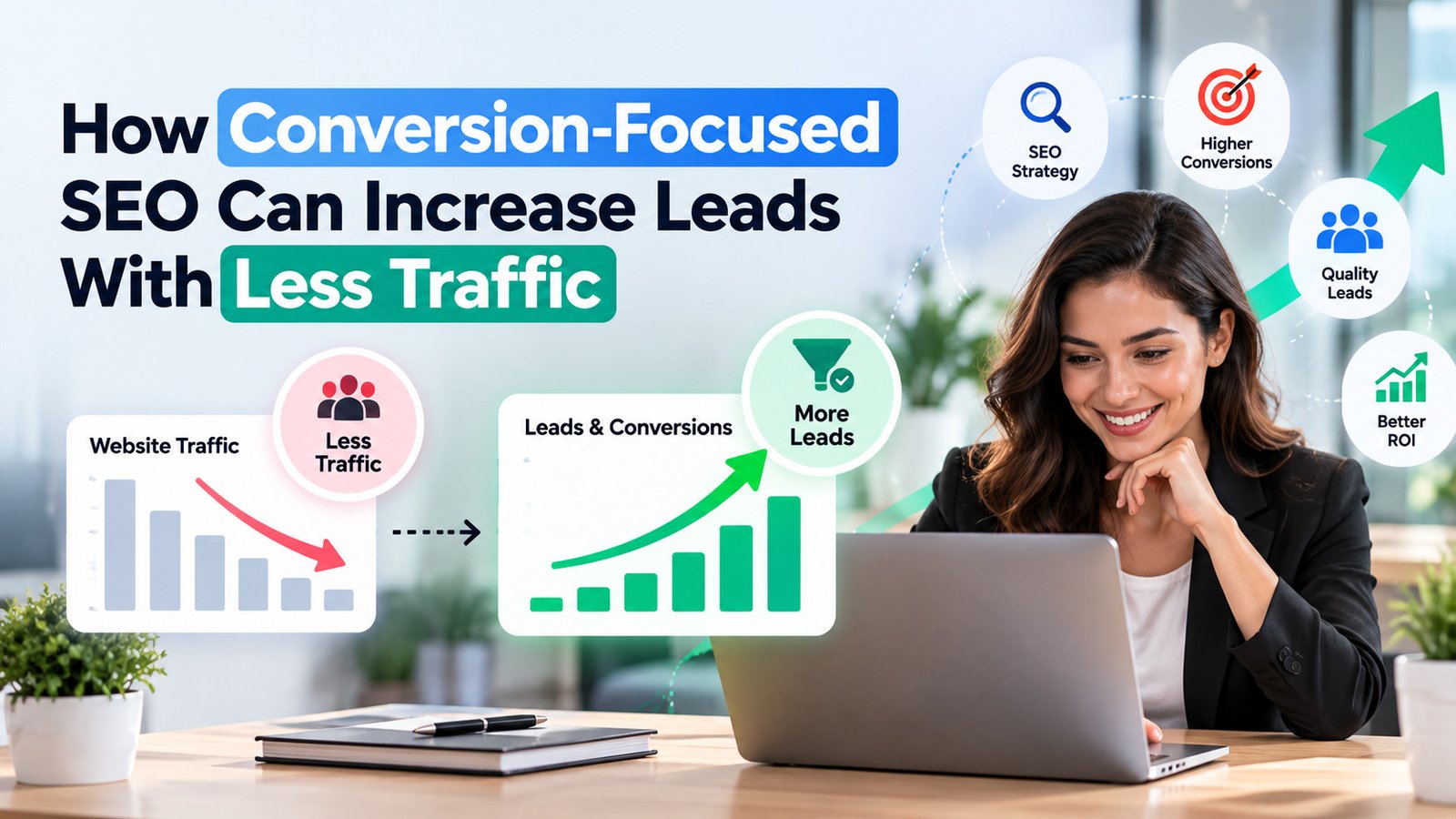
Your Website May Not Need More Traffic. It May Need Better Traffic.
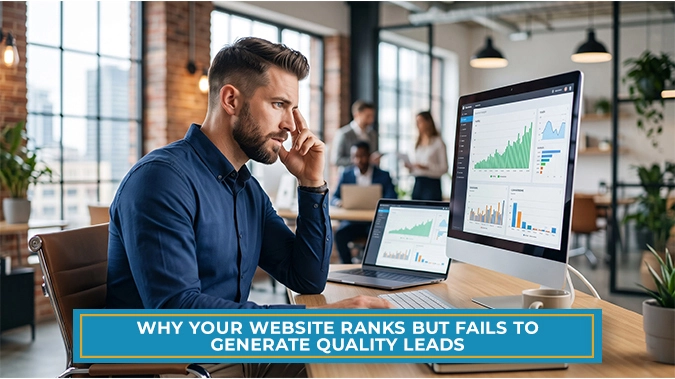
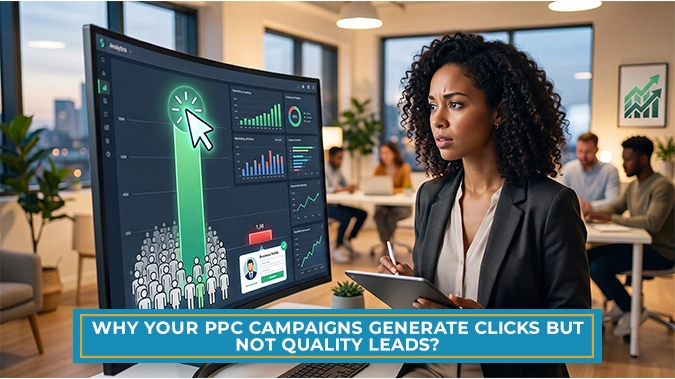
Getting more visitors sounds like the obvious SEO goal. But what happens when traffic keeps increasing while enquiries, demos, calls or purchases barely move?
That is where businesses need to look beyond traffic volume.
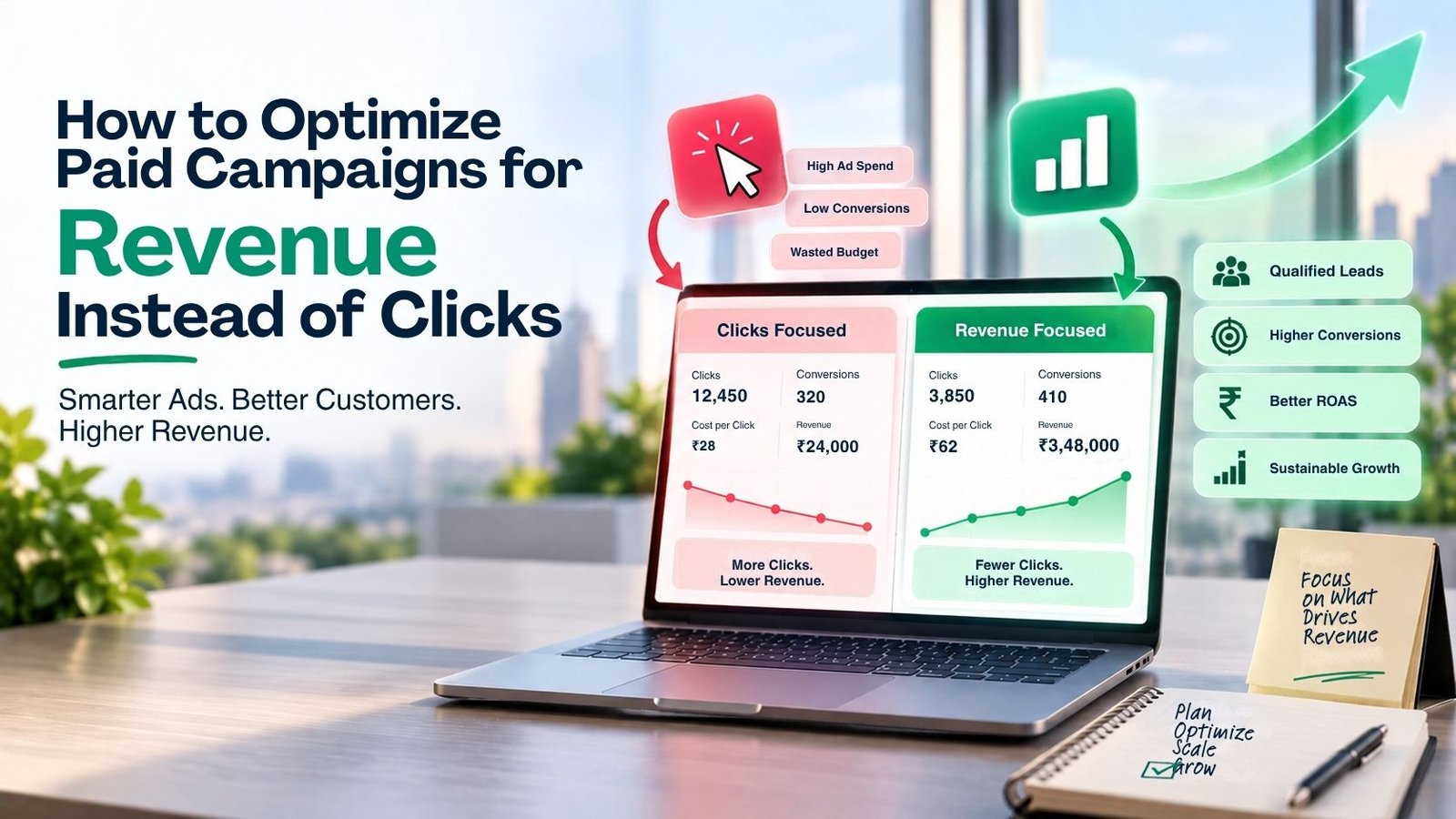
Conversion-focused SEO is about attracting people who are more likely to take a meaningful business action and then giving them a clear path to do it. Instead of chasing every possible keyword, the strategy undergoes a number of processes to generate revenue.
In other words, the goal is not simply to bring more people to your website. It is to make the traffic you already earn more valuable.
What Is Conversion-Focused SEO?
Conversion-focused SEO combines search engine optimization with conversion rate optimization. It considers not only how a page ranks, but also who lands on it, why they searched, what they need next and what action they can take.
Traditional SEO can become heavily focused on rankings, keywords and traffic volume. Conversion-focused SEO connects those activities with business outcomes such as enquiries, demos, calls, registrations and sales.
The basic journey looks like this:
Search intent → Relevant traffic → Useful content → Conversion path → Qualified lead → Customer
That is why SEO for Lead Generation should not be treated simply as a traffic-acquisition exercise.
Why More Website Traffic Doesn't Always Mean More Leads
More traffic can come from many different sources and search terms. But not every visitor represents a potential customer.
You may be attracting:
- People looking for free information
- Users outside your target geography
- Visitors researching a topic with no buying intention
- Job seekers or students
- Audiences searching for something your business does not offer
- Visitors landing on pages that do not match their expectations
There is another problem: even relevant visitors can leave if the page has a weak offer, unclear CTA, poor UX or no obvious next step.
So, the real issue may not be a lack of traffic.
It may be traffic quality + conversion experience.
Traffic vs Qualified Traffic vs Leads: What's the Difference?
SEO performance is easier to understand when you look at the entire funnel:
Impressions → Clicks → Visitors → Leads → Qualified Leads → Customers
Traffic tells you that people reached your website. A lead tells you that someone took an action. A qualified lead goes further by matching your target customer profile and showing genuine business potential.
This is why SEO reporting should move beyond rankings and sessions.
Google Search Console, for example, allows businesses to analyze clicks, impressions, CTR, queries and pages. It can also help identify pages with lower CTR and queries that bring users to the site.
The question becomes less about how many people arrived and more about what valuable actions followed.
8 Ways Conversion-Focused SEO Can Generate More Leads with Less Traffic
1. Target High-Intent and Commercial Keywords
Not every keyword deserves equal priority.
Searches containing terms such as services, pricing, provider, agency, consultant, comparison, near me or specific solution terms can indicate stronger commercial intent.
The objective is not to build the biggest keyword list. It is to identify searches connected to genuine customer problems and buying decisions.
2. Match Content with Search Intent
Someone searching “what is SEO?” is at a different stage from someone searching “SEO agency for B2B companies in Pune”.
Both searches matter, but they require different content.
Understanding informational, commercial and transactional intent allows businesses to create pages that answer the question the user actually has instead of forcing every visitor through the same sales message.
3. Create Content Around Customer Problems
Customers do not wake up thinking, “I need to read another SEO blog.”
They have problems to solve.
A SaaS company could create content around software comparisons, implementation challenges, pricing considerations and common selection mistakes. A local service business could address pricing, service options, location-specific problems and buyer questions.
This makes SEO Conversion Optimization part of content planning rather than something added after an article is published.
4. Optimize Landing Pages for Conversions
Ranking gets the visitor to the door. The landing page has to give them a reason to stay.
A conversion-focused landing page should have:
- A clear value proposition
- Relevant and useful information
- Logical page structure
- Strong trust signals
- Visible CTAs
- Simple enquiry forms
- Mobile-friendly UX
- A clear next step
Most importantly, the page should deliver what the searcher expected when they clicked the result.
5. Strengthen Calls-to-Action
“Contact Us” is easy to ignore.
A more relevant CTA could be:
Book a consultation. Get a customized quote. Request a demo. Speak with an expert. Get an SEO audit.
The right CTA depends on the visitor's intent and position in the buying journey.
6. Build Better Internal Conversion Paths
A blog should not become a dead end.
Someone reading an educational article may be ready to explore a service page, case study or comparison guide next.
Strategic internal linking can help visitors move naturally from learning → evaluating → considering → enquiring.
That is where Organic Traffic Conversion becomes a real business strategy rather than another SEO metric.
7. Build Trust Before Asking for the Lead
People rarely submit their details simply because a page ranks well.
They need confidence.
Original insights, relevant experience, case studies, customer evidence, transparent information and useful content can help strengthen that confidence.
For B2B companies in particular, trust can influence whether a visitor becomes a lead today, returns later or chooses another provider.
8. Reduce Friction Across the Lead Journey
Sometimes the problem is surprisingly simple.
A complicated form, unclear CTA, slow experience, confusing navigation or weak offer can stop a high-intent visitor from converting.
Conversion-focused SEO therefore looks beyond keywords. It examines the complete journey from search result to landing page to enquiry.
How to Choose SEO Keywords That Generate Leads
Start with your customer's actual decision-making process.
Look for:
- Service-specific keywords
- Commercial modifiers
- Location-based searches
- Comparison queries
- Pricing-related searches
- Product or solution terms
- Problem-aware searches
- Bottom-of-funnel queries
For example, a Pune-based B2B company may gain more business value from ranking for specific service and location searches than from attracting large volumes of broad, informational traffic.
The goal is not to collect the largest possible keyword list. It is to build a keyword set connected to real demand.
How Search Intent Improves SEO Lead Quality
Search intent can broadly be understood through four categories:
|
Search Intent |
Typical Purpose |
Lead Potential |
|
Informational |
Learning or researching |
Usually earlier-stage |
|
Navigational |
Finding a specific website or brand |
Brand dependent |
|
Commercial |
Comparing or evaluating options |
Often stronger |
|
Transactional |
Taking an action or making a purchase |
Often closest to conversion |
This does not mean informational searches have no business value. They can build awareness and authority. But businesses focused on lead generation should also create content for users who are further along the buying journey.
How Landing Page SEO and CRO Work Together
SEO gets the right person to the page.
Conversion optimization helps the page persuade that person to take the next step.
That means both disciplines need to work together. Keyword targeting, content relevance, page structure, mobile usability, CTA placement, form design, trust signals and offer clarity all contribute to the experience.
For businesses looking to connect SEO with broader AI-led search visibility, AI SEO Services in Pune can also help expand optimization beyond conventional search results towards emerging AI discovery environments.
SEO Metrics to Track When Leads Matter More Than Traffic
If leads are the objective, consider tracking:
- Organic conversion rate
- Qualified lead rate
- Lead-to-customer rate
- Conversion value
- Revenue from organic search
- Cost of acquiring customers
- Assisted conversions
- Landing-page conversion rate
Traffic still matters. It simply should not be the only number that matters.
Google itself recommends analyzing search performance by queries and pages and looking at clicks, impressions and CTR rather than relying on average position alone.
Traffic-Focused SEO vs Conversion-Focused SEO
|
Traffic-Focused SEO |
Conversion-Focused SEO |
|
Focuses on visitor volume |
Focuses on qualified opportunities |
|
Targets broader visibility |
Targets relevant search intent |
|
Measures traffic and rankings |
Measures leads and conversions |
|
Creates content to attract visits |
Creates content around customer needs |
|
Treats the click as success |
Looks at what happens after the click |
|
Prioritizes reach |
Prioritizes business relevance |
So, the difference that we notice is that conversion-focused SEO does not ignore traffic rather it helps us understand a better question, “What is that traffic worth?”
How AI, AEO and GEO Can Support Conversion-Focused SEO
Search behaviour is becoming more conversational, and businesses now need to consider how their expertise and content appear across traditional search as well as AI-driven discovery.
That makes clear answers, topical relevance, authority and useful information increasingly important.
For businesses looking to strengthen their visibility across evolving search environments, AI SEO Services in Pune can support a broader strategy that considers traditional search, answer engines and emerging AI discovery experiences.
But the principle remains the same: visibility alone is not enough.
The brand still needs to be relevant when the customer is ready to evaluate a solution.
A Practical Conversion-Focused SEO Framework
A simple framework can keep the strategy connected to business outcomes:
Keyword research → Search intent → Content mapping → Landing page → CTA → Conversion tracking → Lead qualification → Continuous optimization
This approach also gives SEO, content, marketing and sales teams a common framework.
Instead of celebrating traffic increases in isolation, they can ask whether those increases are producing better opportunities.
When Should Businesses Invest in Professional SEO Services?
A conversion-focused SEO strategy becomes particularly relevant when:
- Organic traffic is growing but leads remain stagnant
- High-ranking pages generate little business value
- The website attracts the wrong audience
- Commercial keywords are underperforming
- Visitors leave without taking action
- Content generates visits but few enquiries
- SEO reporting focuses almost entirely on rankings and traffic
This is where professional SEO Services can move from traffic generation towards measurable business growth.
For businesses that already have organic visibility but are struggling to turn it into opportunities, SALETIFY can help connect search strategy, content optimization, landing-page performance and lead-generation goals.
The Bottom Line
More traffic can help a business grow, but traffic alone does not pay the bills. The real opportunity lies in attracting people with relevant intent, giving them useful answers, building trust and making the next step obvious.
That is the shift from traffic-focused SEO to conversion-focused SEO.
When SEO for Lead Generation, content strategy, landing-page optimization and conversion tracking work together, businesses can potentially generate more value from the organic traffic they already have.
The goal is simple. Stop chasing visitors for the sake of numbers and start building search visibility that creates business opportunities.
Want More Leads Without Constantly Chasing More Traffic?
Partner with SALETIFY for a conversion-focused SEO strategy built around search intent, content relevance, landing-page optimization and qualified lead generation.
Stop measuring SEO only by how many people visit. Start measuring what those visitors create for your business.
FAQs:
- What is conversion-focused SEO?
Conversion-focused SEO is an approach that combines search optimization with conversion strategies to attract relevant visitors and encourage them to take meaningful actions such as enquiries, demos, calls or purchases.
- Can SEO generate more leads with less traffic?
Yes, potentially. If existing organic traffic becomes more relevant and converts at a higher rate, a business may generate more leads without needing the same level of traffic growth.
- Why does my website get traffic but no leads?
The issue may involve low-intent traffic, weak search-intent alignment, unclear CTAs, poor landing pages, limited trust signals or friction in the enquiry process.
- How can I turn organic traffic into leads?
Target relevant search intent, create useful content, optimize landing pages, strengthen CTAs, improve internal conversion paths and track organic conversions and qualified leads.
- What SEO keywords generate the most leads?
There is no universal keyword category that guarantees leads. Commercial, service-specific, comparison, pricing, location-based and transactional searches can indicate stronger buying intent depending on the business.