
What ROI Should You Expect from a Digital Marketing Agency in 2026?
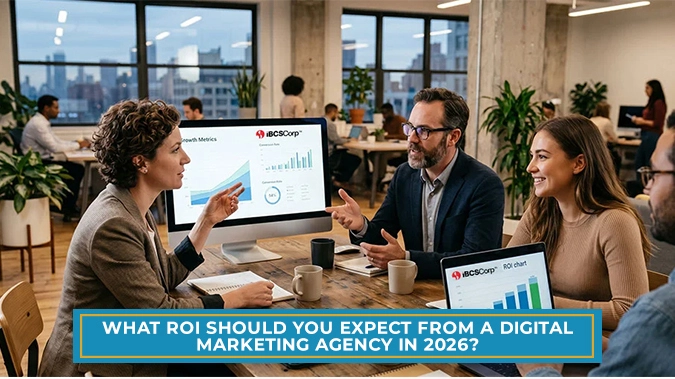
Investing in digital marketing is no longer just about increasing visibility. It's about generating measurable business growth. This guide explores the ROI businesses can realistically expect from a digital marketing agency in 2026, the factors that influence performance, and the metrics that matter when evaluating marketing success.
Overview: Digital marketing ROI depends on factors like industry, budget, website performance, and marketing channels. Paid ads can deliver faster returns, while SEO and content marketing drive stronger long-term growth. The real measure of success is business outcomes like leads, revenue, and conversions, not vanity metrics.
Key Takeaways:
- ROI differs by marketing channel.
- SEO is a long-term investment.
- Focus on revenue-driven KPIs.
- Measure ROI with the right metrics.
- Strong websites and funnels improve results.
- Agency and in-house models offer different ROI advantages.
- AI is reshaping SEO and marketing performance.
- Businesses must adapt to AI-driven marketing trends.
In 2026, ROI has become the deciding factor for whether a business continues, scales or shuts down its marketing investments. With rising ad costs, tighter competition, and AI reshaping how users discover brands, businesses are no longer asking “Should we do marketing?” Instead, they are asking a sharper question: “Is this actually giving us returns?”
This transition has made ROI expectations from digital marketing agencies far more important than ever. But the reality is, ROI is not a fixed number. It depends on strategy, execution quality, industry, and how well your entire funnel is structured.
In this blogpost, let us understand what actually drives returns for digital marketing agencies in 2026.
What Does ROI Mean in Digital Marketing?
In simple terms, Return of Investment (ROI) measures how much revenue you earn compared to what you spend on marketing.
Formula to calculate ROI:
(Return – Investment) ÷ Investment × 100
But in real marketing environments, ROI is not just about immediate revenue. It also includes:
- Lead quality generated
- Sales pipeline value
- Customer lifetime value (CLV)
- Retention and repeat purchases
A campaign might look expensive at first but deliver long-term compounding returns if structured correctly. That is why modern marketers also rely on structured evaluation systems like a ROI-focused marketing framework instead of isolated campaign reporting.
Average ROI Benchmarks by Marketing Channel in 2026
ROI varies significantly based on the channel and execution process. Some of the major ROI benchmarks include:
SEO ROI
SEO continues to deliver one of the strongest long-term returns because it builds compounding visibility. However, understanding the SEO results timeline is essential. This is because it takes around 3 to 9 months to see meaningful results, depending on how competitive the market is and the quality of the content being published.
PPC / Google Ads ROI
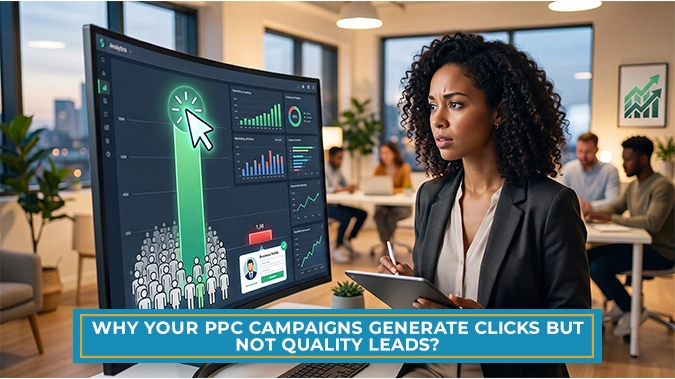
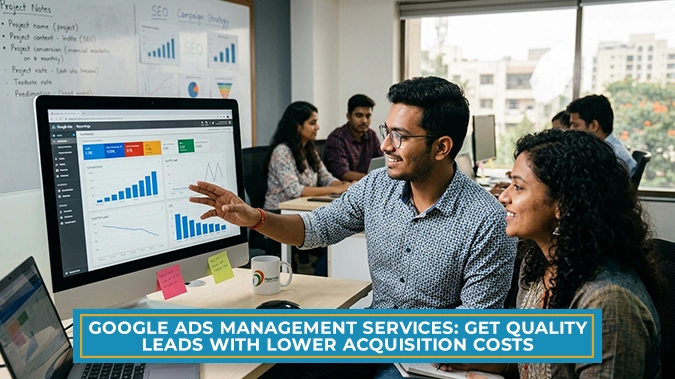
Paid ads can generate faster returns, but efficiency depends heavily on targeting and landing page quality. To understand timing better, businesses often evaluate how long does SEO take to show ROI compared to PPC, which is usually immediate but cost-sensitive.
Content Marketing ROI
Content builds trust before conversion. While ROI may feel slower, it significantly reduces customer acquisition cost over time.
Email Marketing ROI
Email marketing consistently delivers strong returns when powered by quality audience data. It's especially effective for building customer loyalty, nurturing relationships, and driving repeat purchases.
Social Media Advertising ROI
This channel is highly dependent on creative quality and funnel strength. It works well for awareness but needs strong retargeting for conversions.
Factors That Influence Marketing Agency ROI
ROI does not appear accidentally. It requires multiple business and execution variables. Some of the major driving factors include:
- Industry competition and keyword difficulty
- Budget allocation across channels
- Website and landing page conversion quality
- Sales funnel maturity
- Offer positioning and pricing clarity
- Tracking and attribution setup
Even the best agency cannot fix weak positioning or poor conversion systems overnight. That is why modern digital marketing agencies today focus heavily on metrics used to measure marketing ROI instead of just traffic or impressions.
How Long Does It Take to See ROI?
ROI timelines vary depending on channel set ups, such as:
- SEO: 3–9 months for stable returns
- PPC: 1–4 weeks for initial results
- Content marketing: 3–6 months for traction
- Brand building: 6–12 months for compounding impact
This is where expectations matter the most. Businesses often underestimate the role of patience in organic growth strategies. A structured ROI-focused marketing framework helps align expectations with reality instead of chasing instant results.
Key Metrics You Should Track in 2026
If ROI is important, tracking the right signals is even more important. So, digital marketing businesses need to focus on:
- Customer Acquisition Cost (CAC)
- ROAS (Return on Ad Spend)
- Conversion rate
- Lead quality score
- Pipeline contribution
- Customer lifetime value
These are core digital marketing KPIs that define real performance, not vanity metrics like impressions or likes.
What are the Red Flags: Unrealistic ROI Promises
If an agency promises guaranteed returns, it is a warning sign. Watch out for:
- Guaranteed rankings or fixed ROI claims
- No transparency in reporting
- Focus only on traffic instead of conversions
- Lack of clear attribution tracking
Real growth comes from consistent optimization, there are no shortcuts for this.
Agency vs In-House Marketing ROI
One of the biggest decisions growing businesses face is whether to build an internal marketing team or partner with an agency. While both approaches can deliver results, the return on investment often depends on the company’s growth stage, available resources, and marketing objectives.
Agency Model
Working with an agency gives businesses immediate access to a team of specialists across multiple disciplines, including SEO, paid advertising, content marketing, analytics, and conversion optimization. Instead of hiring and managing several employees, companies can leverage diverse expertise under one roof.
Key advantages include:
- Access to experienced specialists without extensive hiring costs
- Faster campaign execution and implementation
- Ability to scale marketing efforts as business needs change
- Exposure to proven strategies, tools, and industry best practices
For businesses looking to accelerate growth, agencies often provide a quicker path to measurable results because the systems, expertise, and processes are already in place.
In-House Model
An internal marketing team offers greater control over brand communication, internal collaboration, and day-to-day marketing activities. Team members develop a deeper understanding of the company's products, culture, and long-term goals.
Benefits of an in-house team include:
- Strong alignment with brand messaging and business objectives
- Faster internal communication and decision-making
- Greater control over priorities and campaign execution
- Long-term knowledge retention within the organization
However, building a high-performing in-house team often requires significant investment in recruitment, training, technology, and ongoing skill development.
Understanding agency vs in-house marketing ROI helps businesses decide based on growth stage, not emotion. Many companies also evaluate digital marketing agency vs internal team before scaling operations.
How to Maximize ROI from Your Marketing Agency
To improve returns, businesses need to actively participate in the process. Some practical ways include:
- Set clear KPIs from day one
- Ensure proper conversion tracking
- Improve website and landing page experience
- Align sales and marketing teams
- Focus on qualified leads, not just volume
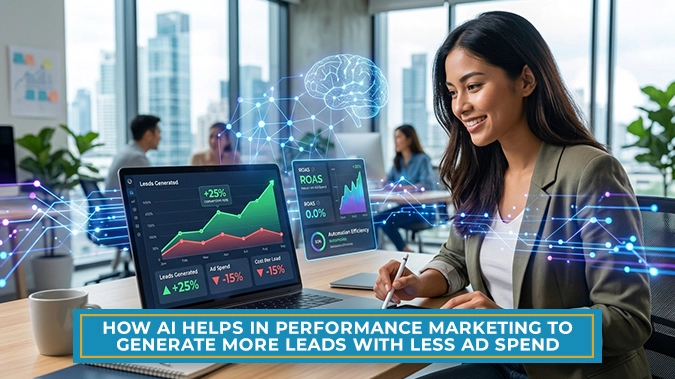
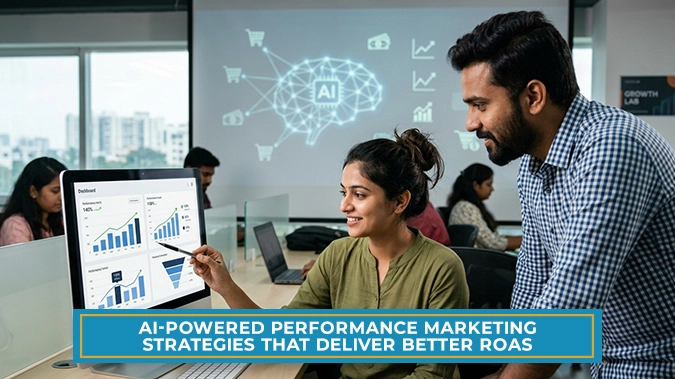
Modern strategies like AI-driven SEO strategies and automation tools also help optimize efficiency and reduce wasted spend. Therefore, improving marketing ROI efficiency is essential for sustainable growth.
Final Thoughts
Marketing ROI in 2026 is less about quick wins and more about system-driven growth. Businesses that win are not the ones spending the most, but the ones building the most efficient funnels.
A strong agency partnership, backed by clear expectations and structured execution, can turn marketing into a predictable revenue engine instead of a cost center. Moreover, with the continuous expansion of AI in reshaping digital discovery, understanding how AI is changing digital marketing ROI and becoming a key competitive advantage.
Get a free marketing ROI assessment from Saletify and discover how a data-driven strategy can help you generate better leads, improve conversions, and maximize returns in 2026.
FAQs:
- What is considered a good ROI in digital marketing?
A good ROI typically ranges between 3:1 to 5:1 depending on the industry. However, high-performing ecommerce or SaaS businesses can achieve even higher returns when funnels and retention strategies are optimized.
- Are digital marketing agencies worth it?
Yes, if they focus on measurable outcomes like leads, conversions, and revenue. A good agency improves efficiency and reduces trial-and-error costs.
- Which marketing channel has the highest ROI in 2026?
SEO and email marketing generally deliver the highest long-term ROI, while PPC offers faster but more variable returns.
- How do agencies measure ROI accurately?
Agencies use tracking tools, attribution models, CRM data, and KPIs like CAC, ROAS, and conversion rates to measure actual business impact.