
Why Your Website Ranks but Fails to Generate Quality Leads?
Getting your website to rank on Google is a major SEO achievement, but rankings alone do not guarantee business growth. You may have thousands of monthly visitors and still struggle to generate enquiries, demo requests, calls, or sales.
The reason is simple. SEO visibility and lead generation are not the same thing. Your website needs to attract the right people, answer their needs, build trust, and give them a clear reason to take action.
If your website ranks well but fails to generate quality leads, the problem may not be your traffic. It could be your search intent, content, landing pages, calls-to-action, user experience, or conversion strategy.
Why High Search Rankings Don't Always Generate Leads
High rankings tell you that Google considers your pages relevant for particular searches. They do not necessarily mean that the visitors reaching your website are ready to buy.
For example, a SaaS company might rank highly for “what is CRM software?” and receive substantial traffic. However, someone searching for “CRM software for small businesses in India” has a much stronger commercial intent.
This is where SEO Services in Pune for lead generation becomes different from traffic-focused SEO. The objective is not simply to bring more visitors. It is to bring visitors who are more likely to become qualified prospects and customers.
10 Reasons Your Website Ranks but Doesn’t Generate Quality Leads
1. You're Targeting the Wrong Search Intent
A keyword can have high search volume but little business value. Informational searches may bring visitors who are researching rather than purchasing.
Your SEO strategy should map keywords to informational, commercial, and transactional intent so that every stage of the customer journey has relevant content.
2. Your Keywords Generate Traffic but Have Low Commercial Value
Ranking for broad keywords can make your traffic numbers look impressive while producing very few enquiries.
Instead of focusing only on search volume, consider keywords that indicate a buying need, such as “SEO services for SaaS companies” or “digital marketing agency for healthcare.”
3. Your Content Answers Questions but Doesn't Solve Buying Problems
Educational content is valuable, but it should not leave the reader wondering what to do next.
Strong content should connect the information with a practical business problem and guide readers toward the next relevant step, whether that means requesting a consultation, comparing solutions, or exploring a service.
4. Your Landing Pages Aren't Built for Conversions
A page can rank well and still perform poorly after the visitor arrives. Common problems include unclear messaging, weak CTAs, excessive text, slow loading, poor mobile design, and a disconnect between the keyword and the page content.
Your landing page should quickly answer three questions:
- What do you offer?
- How can it solve my problem?
- What should I do next?
5. Your Calls-to-Action Are Weak or Unclear
“Submit” or “Learn More” may not give visitors enough motivation to act.
Use CTAs that communicate value, such as “Get a Free SEO Audit,” “Request a Strategy Consultation,” or “Book a Demo.”
The CTA should also match the intent of the visitor. Someone reading an educational guide may need a softer CTA, while someone visiting a service page may be ready for direct contact.
6. Your Website Doesn't Establish Enough Trust
People rarely submit their details to a business they do not trust.
Show relevant experience through client results, case studies, testimonials, reviews, industry expertise, author information, certifications, transparent contact details, and useful supporting content.
These trust signals become particularly important for high-value B2B services, healthcare, finance, and other industries where customers conduct extensive research before making a decision.
7. Your Content Doesn't Demonstrate Strong E-E-A-T Signals
Search engines and users both benefit from content that demonstrates experience, expertise, authority, and trustworthiness.
Instead of producing generic SEO content, show genuine subject knowledge. Use expert insights, practical examples, original data where available, credible sources, clear authorship, and content that reflects real customer problems.
8. Your Website Experience Is Poor on Mobile
A significant portion of website traffic comes from mobile devices. If pages are difficult to navigate, forms are frustrating to complete, or important information is buried, potential leads can disappear before contacting you.
Mobile usability, page speed, Core Web Vitals, navigation, and responsive design should therefore be part of your SEO conversion optimization strategy.
9. Your Lead Forms Create Too Much Friction
Long forms can discourage users from completing them.
Ask only for information that is genuinely necessary at the first stage. Depending on your business, a simple form asking for name, business email, company, and requirement may be enough to start the conversation.
10. You're Measuring Rankings and Traffic Instead of Revenue
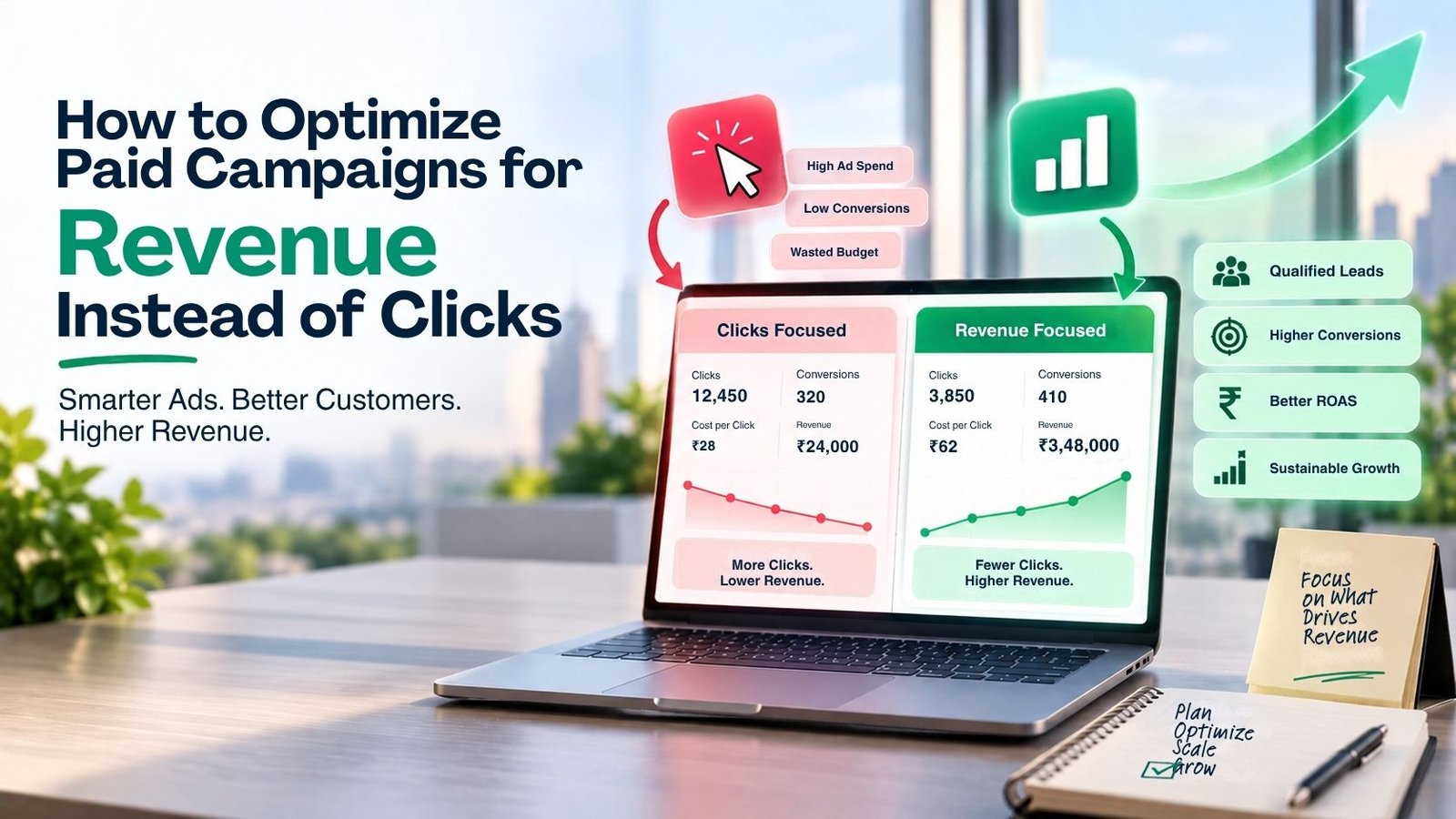
Traffic and rankings are useful indicators, but they are not the final measure of SEO success.
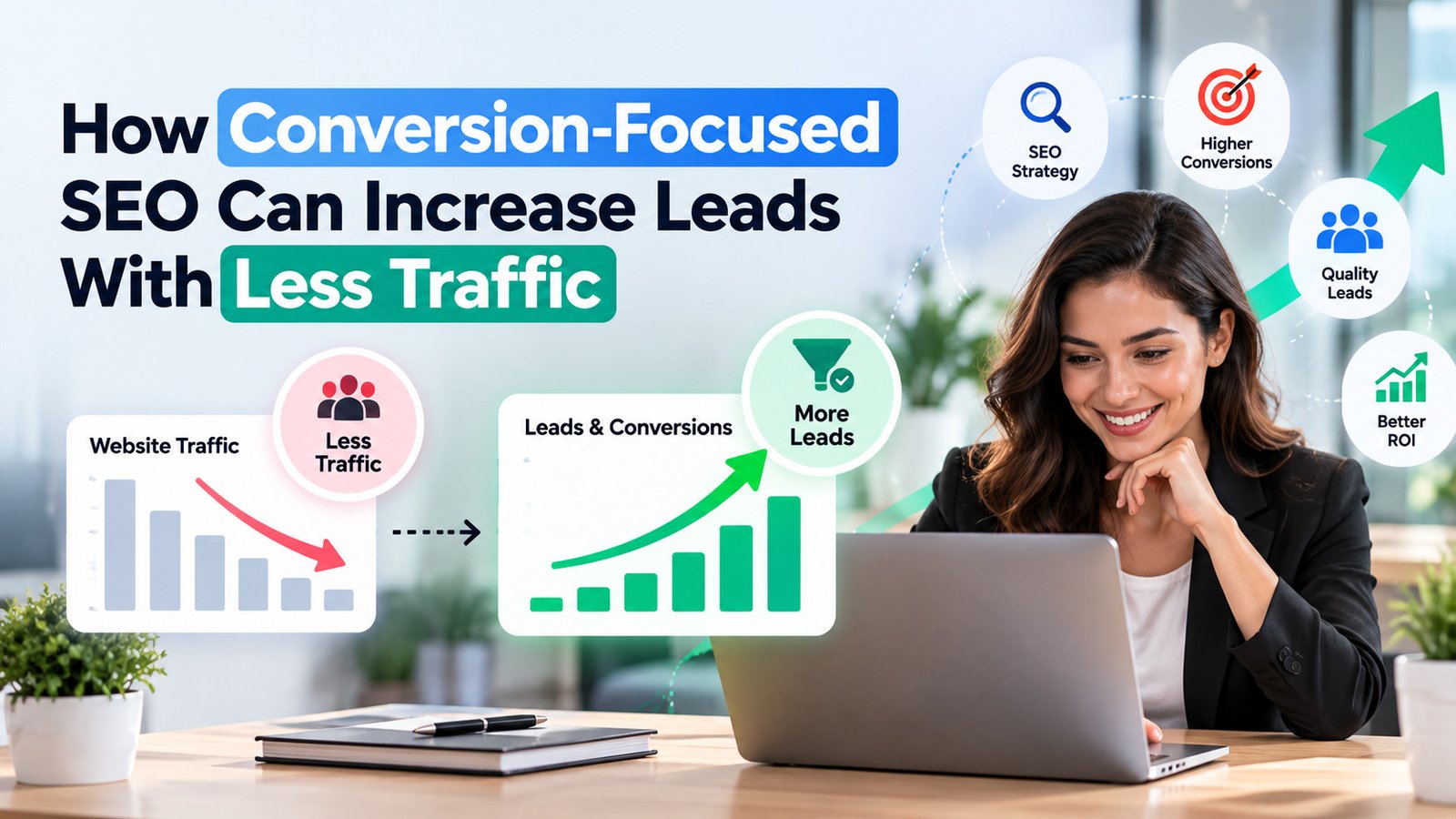
If 50,000 visitors generate fewer qualified opportunities than 5,000 highly targeted visitors, the smaller traffic number may actually represent better performance.
Your reporting should connect organic visibility with leads, qualified leads, customers, CAC, and revenue.
Traffic vs Leads vs Qualified Leads: What's the Difference?
Understanding the funnel helps identify where your SEO strategy is losing potential customers.
Impressions → Clicks → Website Visitors → Leads → Qualified Leads → Customers → Revenue
A visitor becomes a lead when they take an action such as submitting a form or requesting a consultation. A qualified lead goes a step further because they fit your target customer profile and have a genuine business need.
That distinction is critical. SEO lead generation should focus on improving the quality of the entire funnel, not simply increasing the number of visitors.
How to Turn SEO Traffic Into Quality Leads
Start by connecting your SEO strategy with the customer journey.
- Map keywords to intent: Identify which searches indicate research, comparison, or purchase intent.
- Build content around business needs: Create pages that address the problems your ideal customers are actively trying to solve.
- Strengthen commercial pages: Optimize service and product pages around relevant high-intent keywords.
- Improve internal linking: Guide users from informational content toward relevant solutions and service pages.
- Strengthen CTAs: Make the next action obvious and valuable.
- Add trust signals: Use reviews, case studies, credentials, expert information, and relevant proof points.
- Track lead quality: Connect website conversions with CRM or sales data wherever possible.
This approach turns SEO from a visibility exercise into a measurable organic lead generation strategy.
How Conversion Rate Optimization Improves SEO Lead Generation
SEO brings people to your website. CRO helps turn those visitors into opportunities.
Small changes can make a significant difference. Testing different headlines, CTA placements, forms, page layouts, offers, trust elements, and messaging can reveal what encourages users to take action.
For example, a service page that receives 5,000 monthly visitors at a 1% conversion rate generates 50 leads. Improving that conversion rate to 2% would generate 100 leads from the same traffic.
You do not always need more traffic. Sometimes, you need to get more value from the traffic you already have.
How AI, AEO, and GEO Are Changing SEO Lead Generation
Search is no longer limited to traditional blue links. AI-powered search experiences are changing how users discover information, compare businesses, and find solutions.
That means businesses need to consider AEO, GEO, entity SEO, structured data, and AI-search visibility alongside traditional SEO.
Content should be structured so that search engines and AI systems can clearly understand the business, its expertise, services, audience, and areas of authority.
AI can also support keyword analysis, content gap identification, search-intent mapping, personalization, and conversion analysis. However, AI should strengthen a sound SEO strategy rather than replace human expertise and genuine business insight.
SEO Metrics Business Owners Should Track Beyond Rankings
A lead-focused SEO strategy should monitor:
|
Metric |
What It Tells You |
|
Organic Conversion Rate |
How effectively traffic becomes leads |
|
Qualified Lead Rate |
Quality of generated enquiries |
|
Cost Per Lead |
Efficiency of organic acquisition |
|
Lead-to-Customer Rate |
Sales effectiveness |
|
Customer Acquisition Cost |
Overall acquisition efficiency |
|
Organic Revenue |
Direct business value from SEO |
|
Assisted Conversions |
SEO's influence across the customer journey |
These metrics provide a much clearer picture of whether your SEO lead generation services are contributing to business growth.
SEO Traffic vs Lead-Generation SEO
The difference is not simply about getting more traffic. It is about attracting the right traffic and creating a path toward conversion.
|
Traffic-Focused SEO |
Lead-Generation SEO |
|
Prioritizes rankings |
Prioritizes business outcomes |
|
Focuses on traffic volume |
Focuses on qualified visitors |
|
Targets search volume |
Targets search intent |
|
Measures clicks |
Measures leads and revenue |
|
Creates informational content |
Connects content with solutions |
|
Optimizes pages for visibility |
Optimizes pages for conversion |
When Should You Hire a Professional SEO Agency?
Consider professional SEO support when your website receives consistent organic traffic but generates few enquiries, your rankings are improving without revenue growth, commercial keywords are underperforming, or your team cannot identify where conversions are being lost.
A professional SEO partner can evaluate your keyword strategy, content, technical performance, landing pages, conversion paths, analytics, and search visibility to identify the gaps between ranking and revenue.
Saletify Marketing takes this broader approach by combining SEO, content optimization, CRO, AEO, GEO, and AI-search strategies around measurable business objectives rather than rankings alone.
A Practical SEO Lead Generation Framework for Businesses
A sustainable SEO for lead generation strategy can follow this simple framework:
Research → Intent → Content → Landing Pages → CRO → Tracking → Optimization
Start with the searches your ideal customers make. Understand why they search. Build content that addresses their needs. Direct them toward relevant landing pages. Remove conversion barriers, track what happens after the conversion, and continuously improve based on actual business data. This creates a stronger connection between what people search for and what your business sells.
The Bottom Line
A high Google ranking is valuable, but it is only the beginning. If your website attracts visitors without generating quality leads, increasing traffic alone may not solve the problem.
The real opportunity lies in connecting search intent, relevant content, conversion-focused pages, trust signals, CRO, and accurate measurement.
With the right SEO lead generation strategy, your website can move beyond rankings and become a consistent source of qualified business opportunities.
Getting Traffic but Not Enough Leads? Let's Fix That.
Find the gaps between your rankings, traffic, and conversions and discover what your website needs to generate better-quality leads.